All six conditions, eighteen observations and eight process plates. No JavaScript is needed. Use your browser’s Print command for a reading copy. These are fictional illustrations, not measurements, a local burn history or a forecast.
03 / The complete reading guide
Six conditions. No fixed sequence.
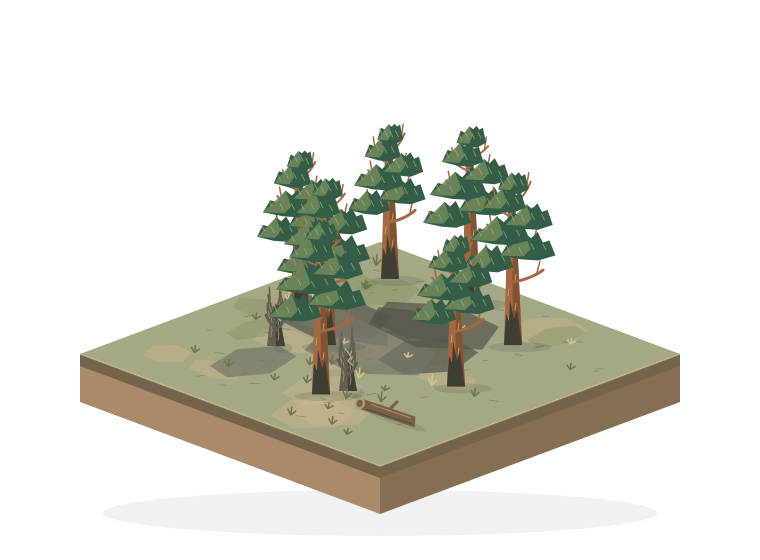
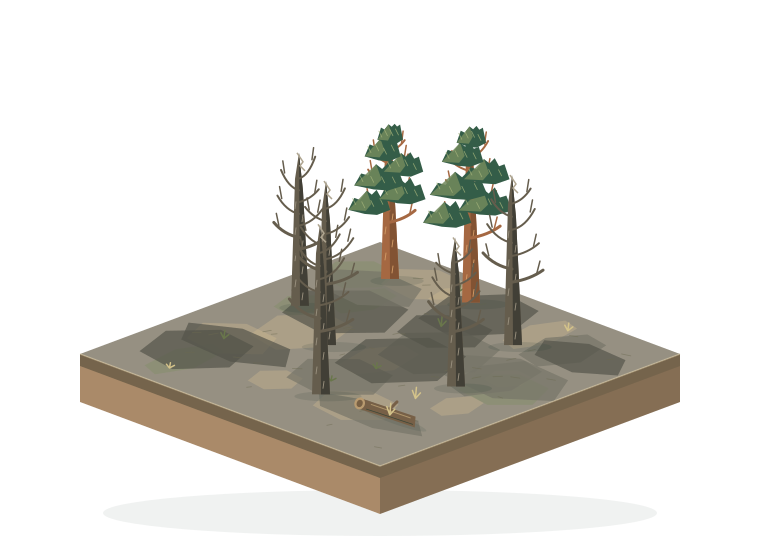
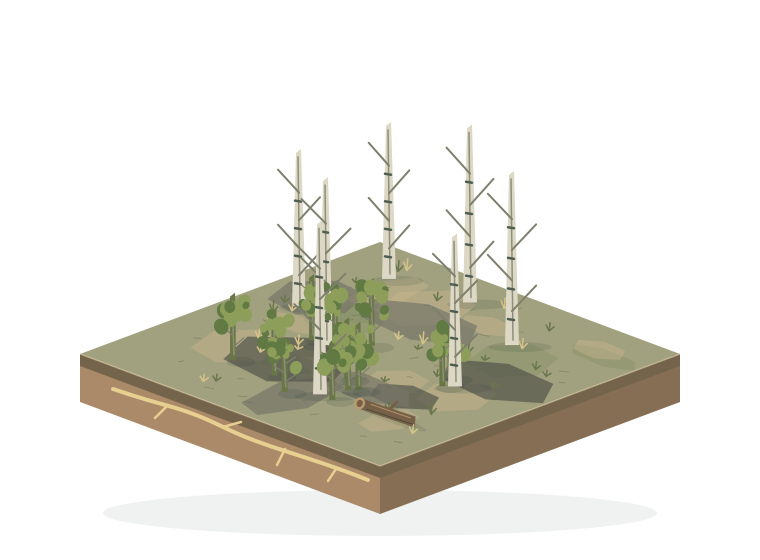
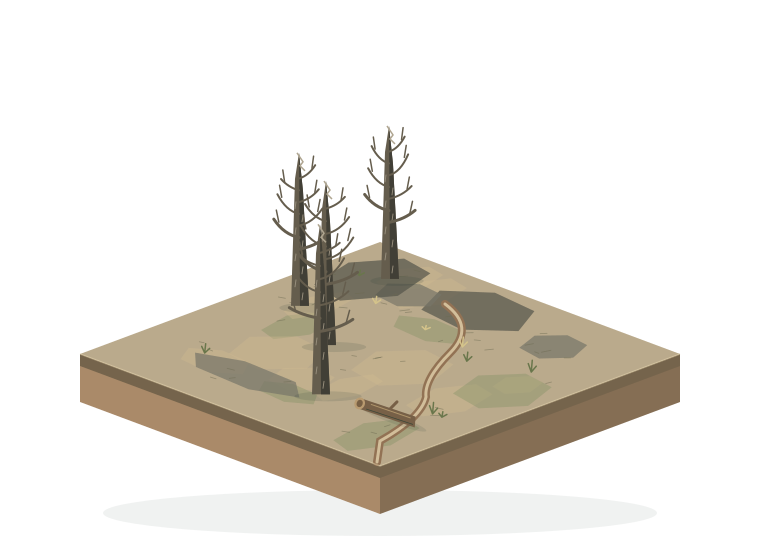
These specimens do not follow one site through time. Read each as a different set of assumptions.
01 / A reference condition
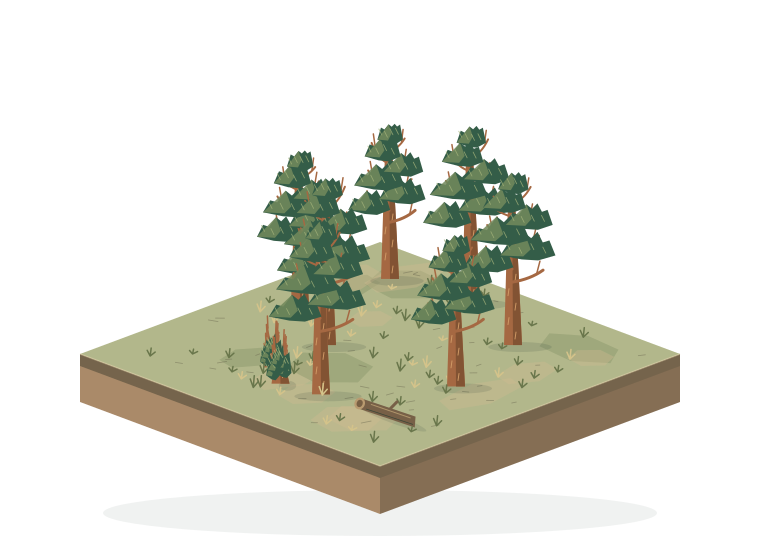
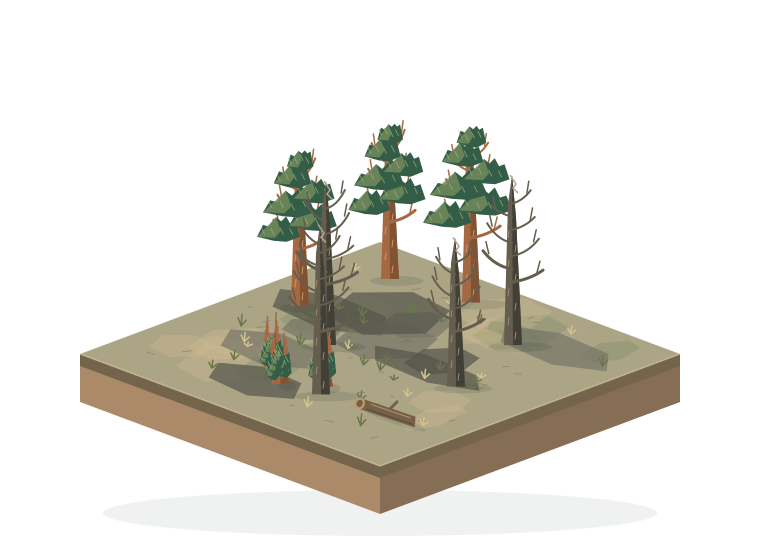
Open pine woodland
Tall pines, separated crowns and a low layer of grasses. This is a starting point for looking, with no burn history assigned.
A mature ponderosa’s bark and high crown can help it withstand some surface fires; a young pine has less protection. [1][2]
Observe, question & qualify
Assumed here. The adult pines are drawn with living crowns. Spacing and plant counts are composition choices.
Canopy: Separated crowns
Compare the green crown shapes with the long sections of bare trunk.
Ground: Litter and low plants
Small grass marks and needle litter fill the spaces between the trunks.
New growth: Two young pines
The small trees are drawn seedlings, not evidence of an actual recruitment rate.
Ask. Which details would you record before comparing another visit?
A closer look at the structures and processes behind the scenes. Every plate is an original schematic.
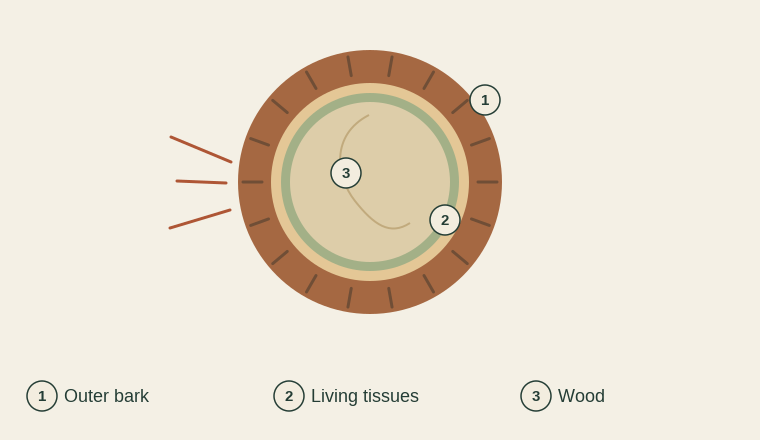
1Outer bark
2Living tissues
3Wood
01 / A trait · mature ponderosa
Bark is a buffer
Thicker bark can insulate living tissues from heat. It offers a degree of resistance, not immunity.
Size, tissue damage and heating duration matter. The rings here are not annual growth rings.
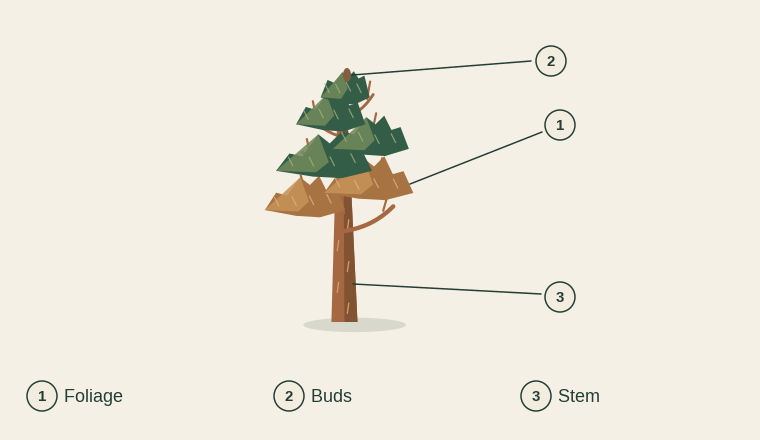
1Foliage
2Buds
3Stem
02 / A process · tissue injury
A crown tells part of the story
Foliage scorch, bud injury and stem damage are different observations. A crown’s color alone is not a verdict on survival.
This plate illustrates tissue locations; it does not diagnose a real tree.
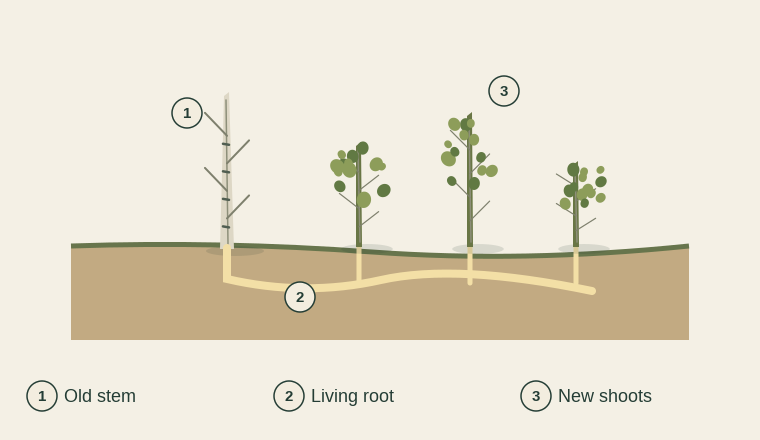
1Old stem
2Living root
3New shoots
03 / A trait · quaking aspen
A stem can end. A root can live.
Aspen’s thin-barked stems may be killed while living lateral roots send up new shoots. That depends on the roots surviving.
Shoot abundance is variable. Connected roots are drawn schematically, without a scale.
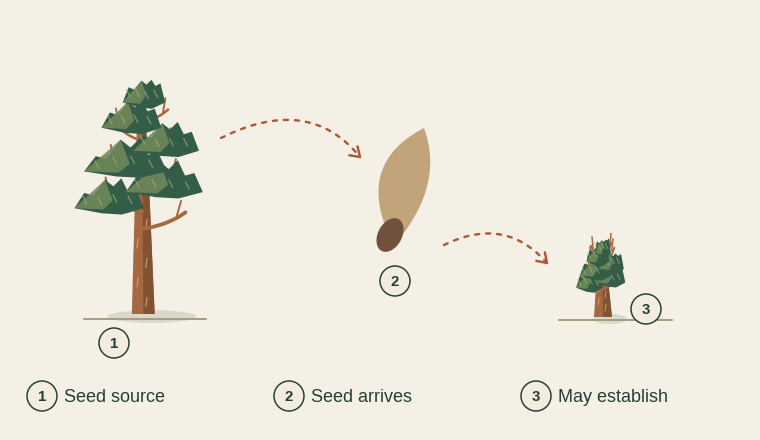
1Seed source
2Seed arrives
3May establish
04 / A process · dispersal
A pine begins with a seed
Ponderosa pine regenerates from seed. Living trees can supply seeds to openings, but arrival and establishment are separate events.
The arrows are a concept, not a wind field, dispersal radius or instruction to plant.
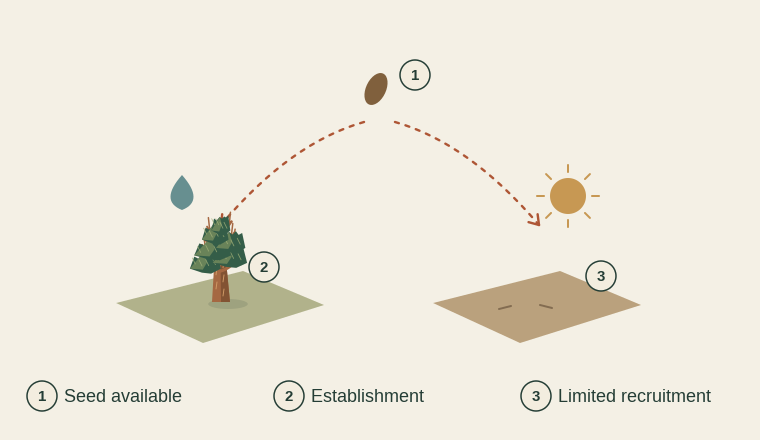
1Seed available
2Establishment
3Limited recruitment
05 / A constraint · regeneration
An opening is not a promise
Postfire conifer seedlings need suitable conditions as well as seeds. Dry, warm conditions can limit recruitment and change future vegetation.
Western US research informs this idea; no threshold or probability has been calculated for Bryce.
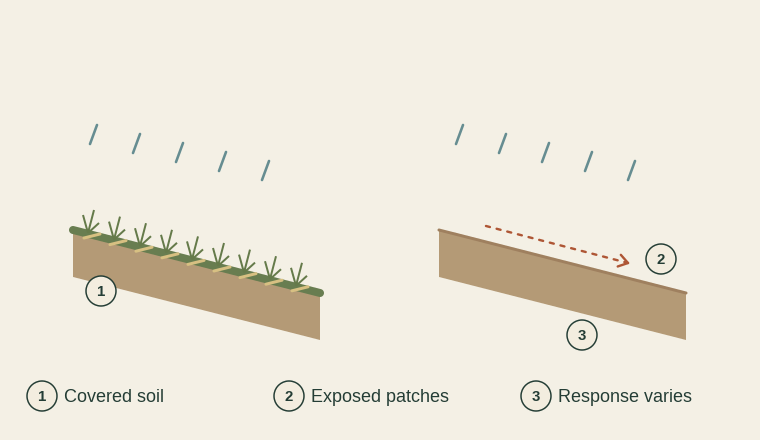
1Covered soil
2Exposed patches
3Response varies
06 / A process · water and soil
Ground cover changes the question
Litter and plants cover soil. When cover is reduced, rainfall and site conditions help determine how much sediment moves.
No water-repellent layer, storm threshold, erosion rate or treatment is inferred.
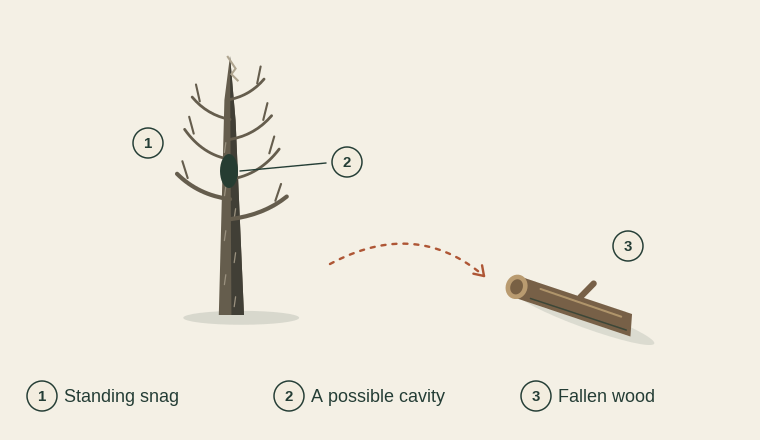
1Standing snag
2A possible cavity
3Fallen wood
07 / A relationship · habitat
Standing dead is still structure
A snag can offer a cavity and other habitat. As it breaks and falls, its role changes; different animals use different structures.
The cavity is invented. No occupancy, species sighting or safe approach to a snag is implied.
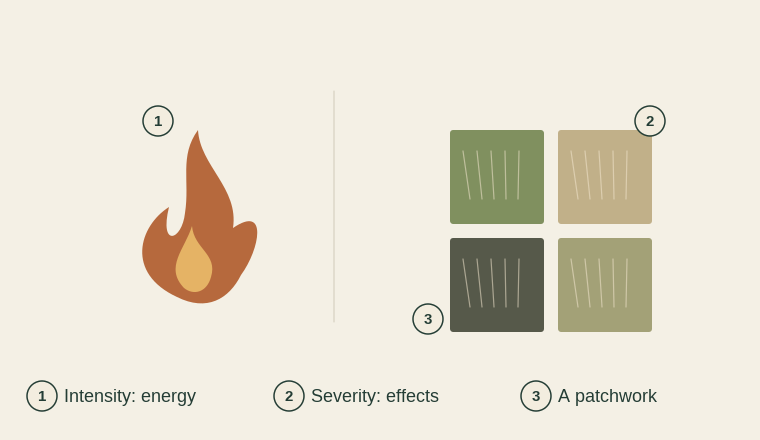
1Intensity: energy
2Severity: effects
3A patchwork
08 / Two terms · intensity / severity
Heat and effect are different
Intensity describes the fire’s energy; severity describes effects on organisms and soil. Effects can differ within one fire footprint.
These small patches are not a burn map or a universal severity scale. Vegetation and soil effects need separate observation.
04 / Sources & interpretation
What the drawings can tell us.
The science informs the questions; the arrangements are invented. Tree counts, root paths, soil depth and colors are illustrative. No scene depicts a particular Bryce fire, survey or location. Sources checked 2026-10-02; publication dates below describe the source, not a burn date.
Soil burn severity is assessed using ground and soil indicators, with field validation.
Terminology and evidence limits only. No field protocol, operational map or treatment decision is reproduced.
All fourteen illustrations and their drawing code were created for this collection. No source photographs, agency emblems or research figures are reproduced. This independent educational collection does not imply NPS endorsement or scientific peer review. Machine-readable sources.