Forty ways to see an idea.
Every plate is original and illustrative. Open any drawing for its standalone SVG. The source catalogue supplies factual context; none of these shapes is a measured feature or a specimen.
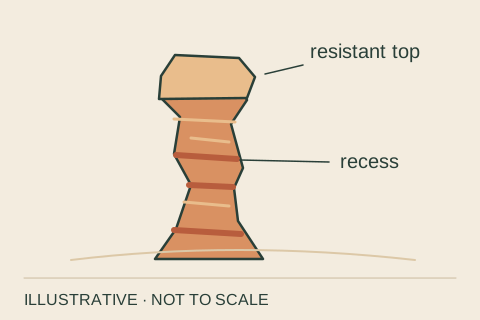
01 · Hoodoo
An irregular layered rock pillar, with a broad resistant top and narrower recessed layers below.
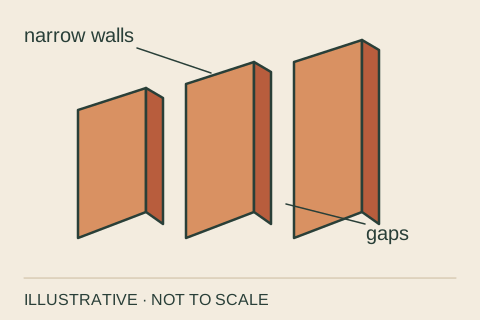
02 · Fin
Three thin parallel rock walls with broad faces, narrow ends and gaps between them.
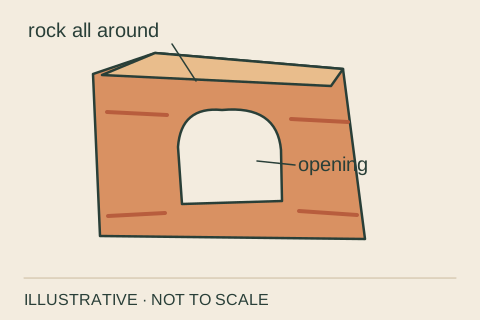
03 · Window
A small enclosed opening through a fin, with unbroken rock above, below and to each side.
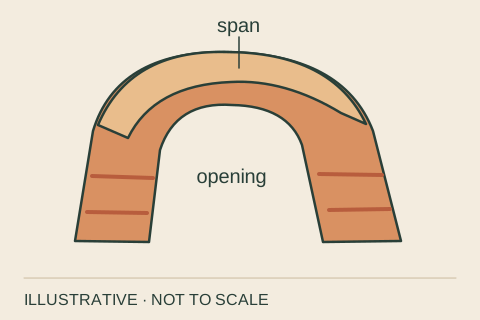
04 · Arch
A broad rock opening with a labeled overhead span and supports at both sides.
05 · Natural bridge
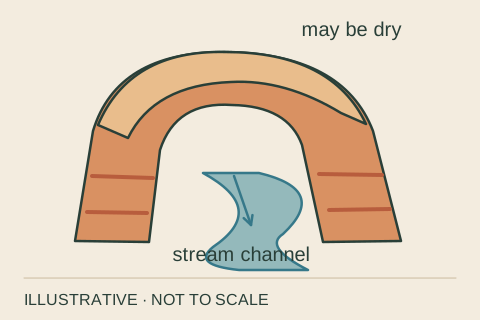
A rock span over a winding stream channel; the channel continues through the opening.
06 · Amphitheater
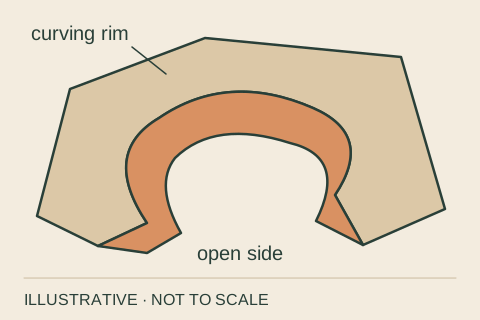
An oblique view of a horseshoe-shaped recess cut into a plateau edge, open toward the foreground.
07 · Plateau
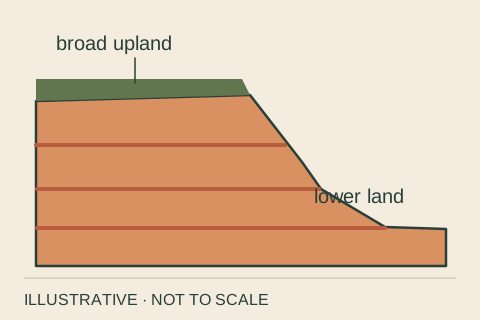
A broad elevated surface above lower country, shown as an illustrative landscape section.
08 · Rim
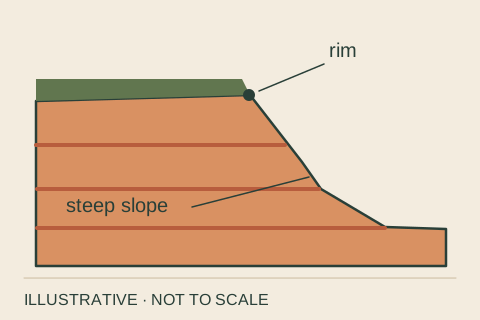
A side view of an upland breaking into a steep slope; a pointer identifies the upper break as the rim.
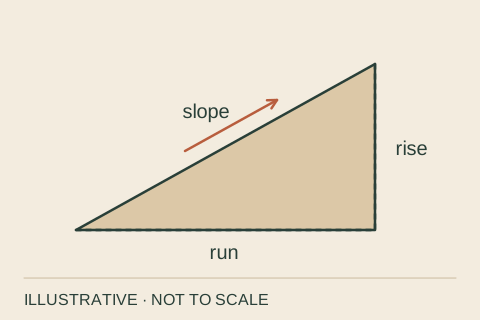
09 · Slope
A right triangle marks vertical rise, horizontal run and the sloping surface between them.
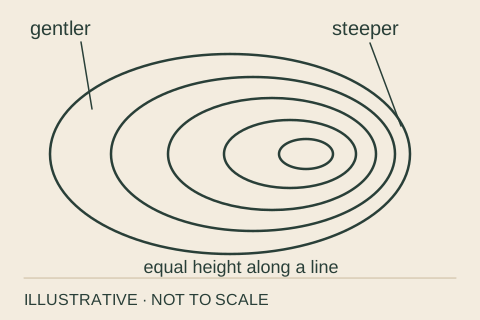
10 · Contour line
Nested elevation contours form a hill; a tightly spaced side is labeled steeper and a wider-spaced side gentler.
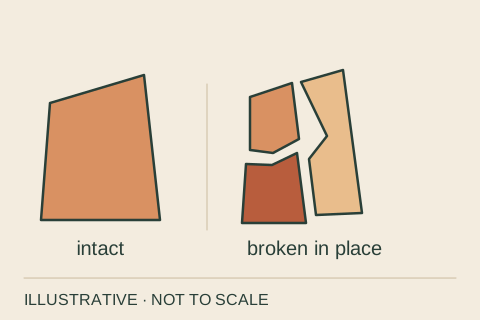
11 · Weathering
A rock block breaks into separate pieces that remain at the same place; no transport arrow is shown.
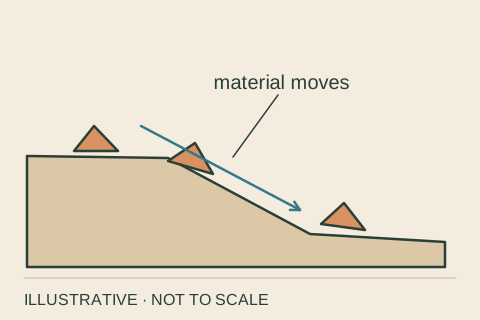
12 · Erosion
Loose rock fragments move down a slope along arrows, leaving their original position.
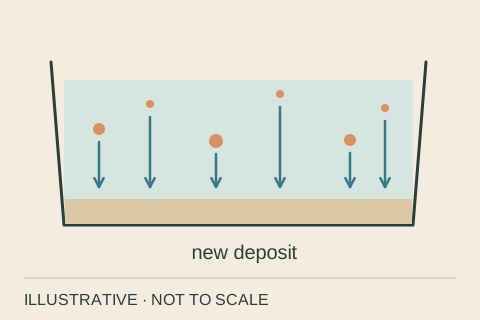
13 · Deposition
Particles descend from water into a new layer on the bottom of a basin.
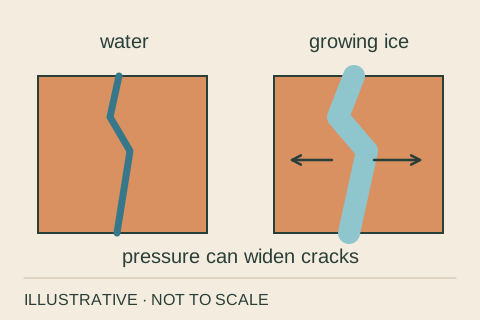
14 · Frost wedging
Water occupies a crack; a second panel shows a wider ice-filled crack with outward pressure arrows.
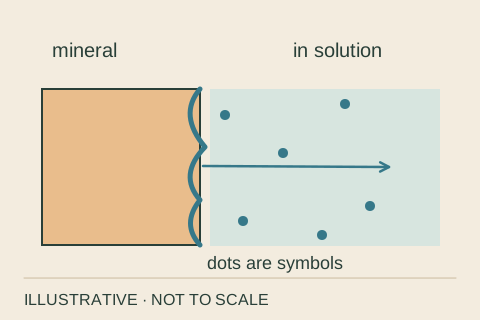
15 · Dissolution
A carbonate surface loses tiny material units into water; dissolved units are symbolic, not visible particles.
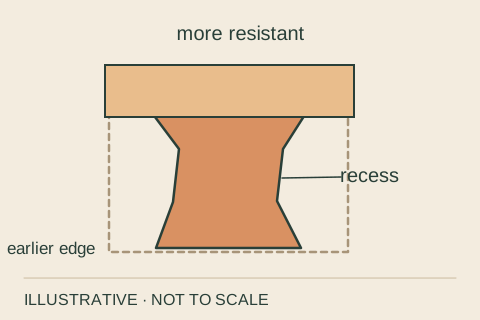
16 · Differential erosion
A resistant upper layer overhangs a more deeply recessed lower layer; dashed lines show the earlier outline.
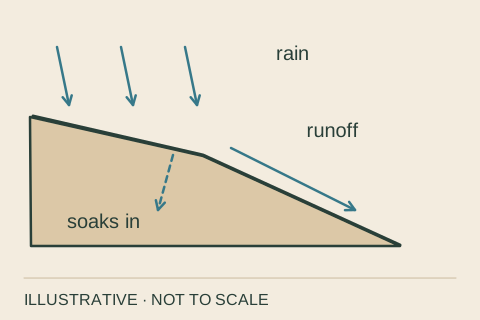
17 · Runoff
Rain reaches a hillside; arrows separate downhill surface flow from water entering the ground.
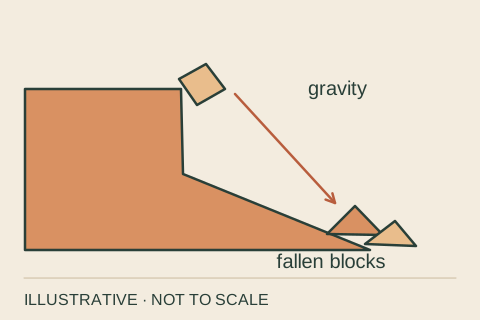
18 · Mass wasting
A block detaches from a steep face and follows a downward path to a pile at the slope base.
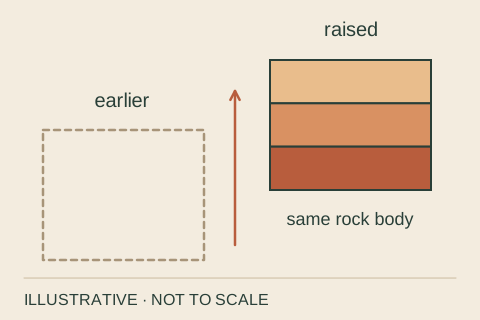
19 · Uplift
A layered rock block is shown at a higher position with upward arrows and a former-position outline.
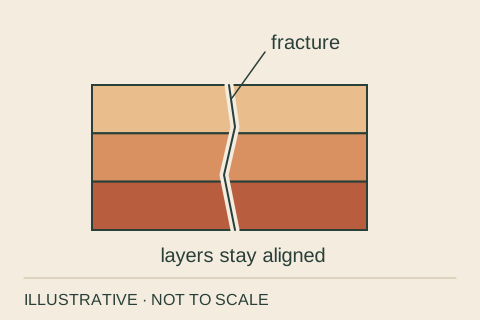
20 · Joint
A vertical fracture crosses three aligned layers; the layers remain at equal heights on both sides.
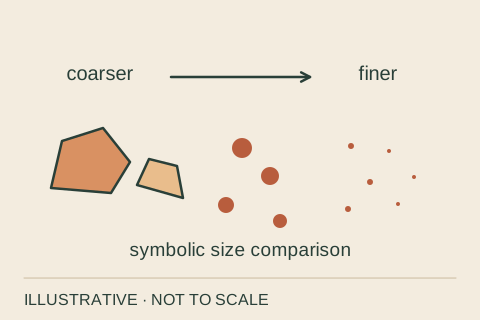
21 · Sediment
Separate large fragments, sand-sized grains and finer particles are shown as a symbolic grain-size comparison.
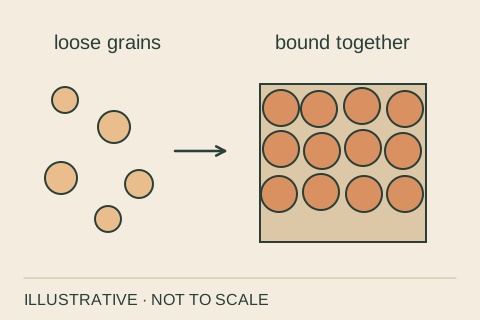
22 · Sedimentary rock
Loose grains at left become packed and cemented into a coherent rock at right.
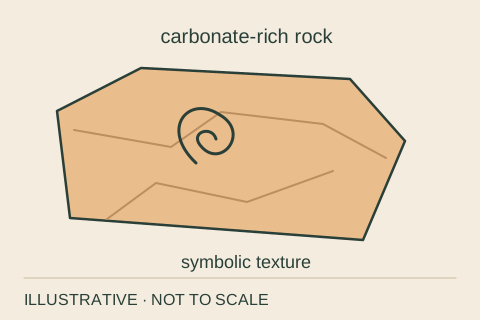
23 · Limestone
A symbolic carbonate rock section, with carbonate grains and a small shell motif; not a sampled specimen.
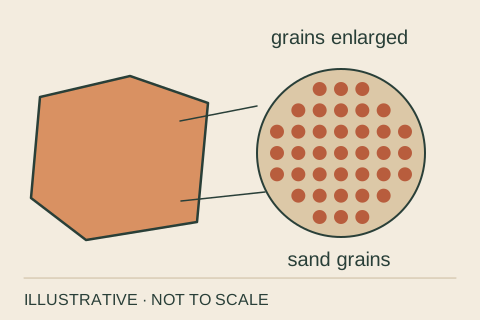
24 · Sandstone
Rounded sand grains sit within a cemented block, with a magnified grain-and-cement detail.
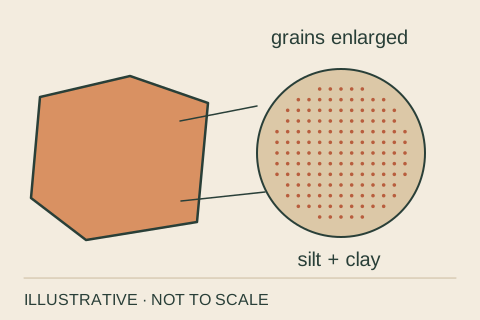
25 · Mudstone
A fine-textured block is paired with an enlarged field of small particles, explicitly shown as a schematic magnification.
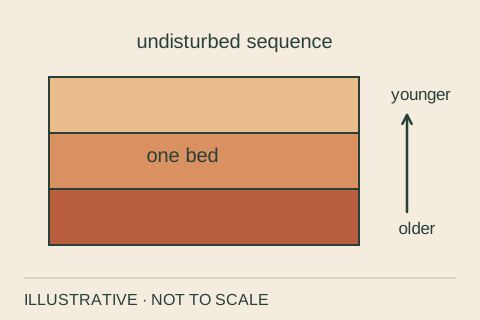
26 · Bedding
Three beds stack one above another, with boundaries traced sideways and younger above older in this undisturbed example.
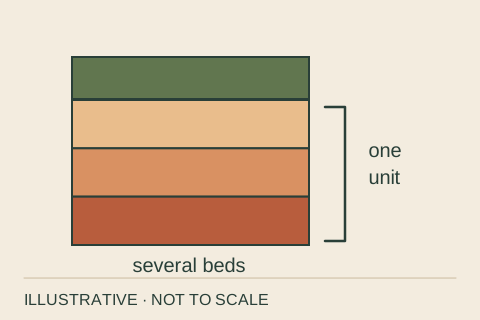
27 · Formation
Several beds are grouped by a bracket as one named rock unit, distinct from a second unit above.
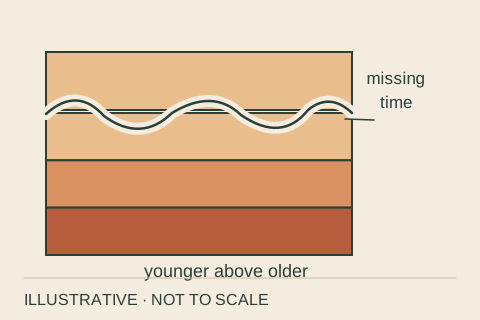
28 · Unconformity
An uneven erosional surface separates older beds below from younger beds above; a label marks missing time.
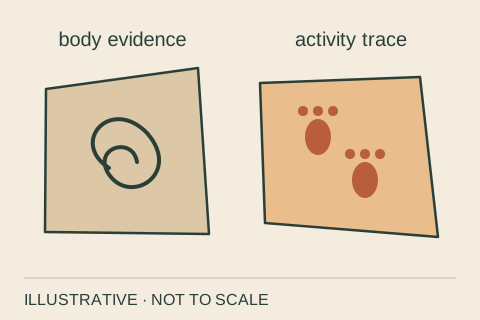
29 · Fossil
A shell shape represents body evidence and a track represents activity; both are illustrative examples of fossils.
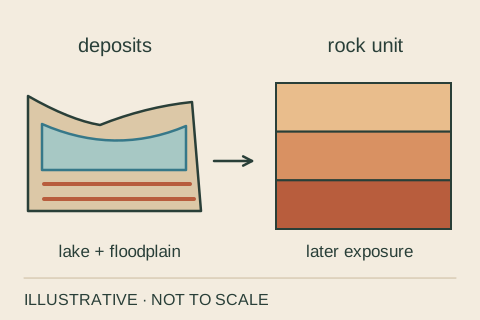
30 · Claron Formation
A lake-and-floodplain scene is connected to a later layered rock exposure; the two panels are conceptual, not a reconstruction.
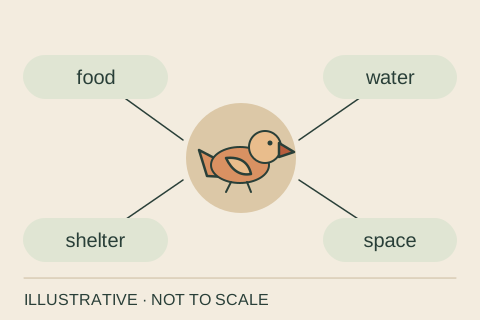
31 · Habitat
A generic bird illustration is surrounded by labeled food, water, shelter and space connections.
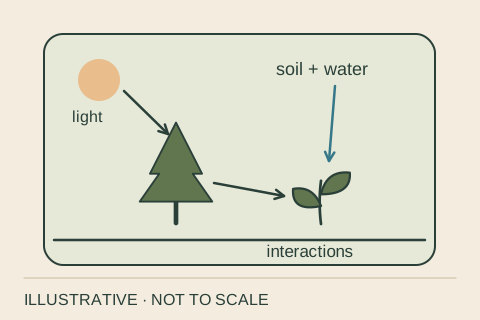
32 · Ecosystem
Plants, sunlight, water and soil connect within an outlined system boundary.
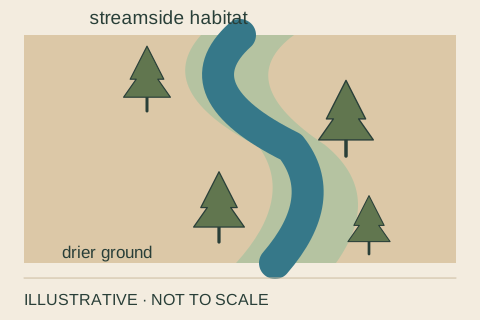
33 · Riparian
A winding channel has a vegetated strip along its banks, contrasted with drier surrounding ground.
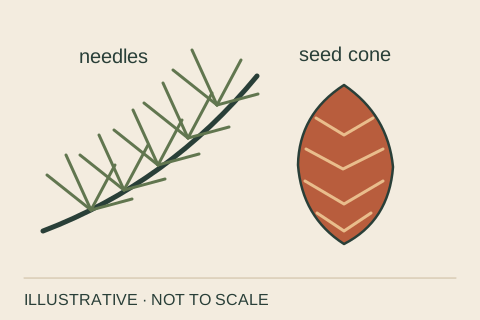
34 · Conifer
A generic needle-bearing branch and a seed cone are shown together, without a species identification.
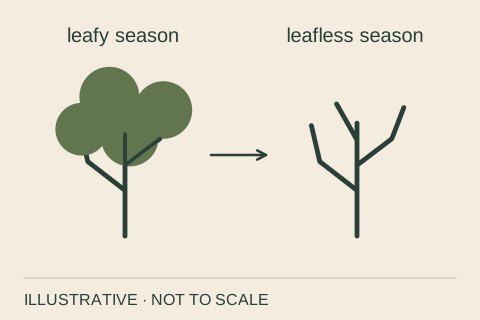
35 · Deciduous
The same branching tree appears with summer leaves and then bare in winter.
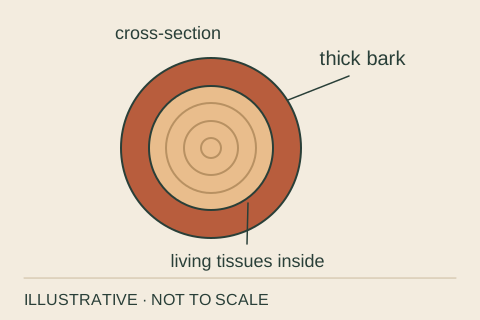
36 · Adaptation
A tree-trunk cross-section highlights a thick outer bark layer as one illustrative protective trait.
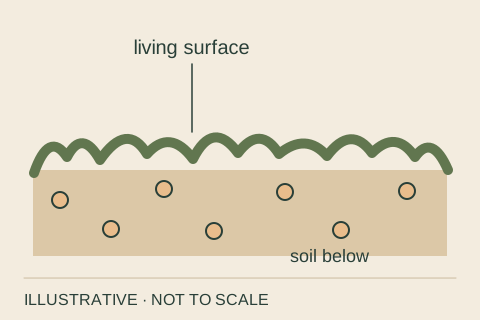
37 · Biological soil crust
A magnified soil surface shows a thin living crust connecting soil particles above deeper ground.
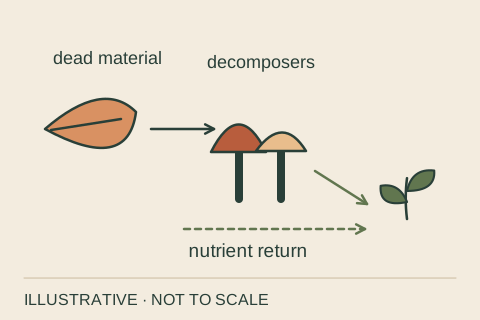
38 · Decomposition
Dead leaves connect to fungi and soil nutrients, then to a growing plant; the diagram labels nutrient return.
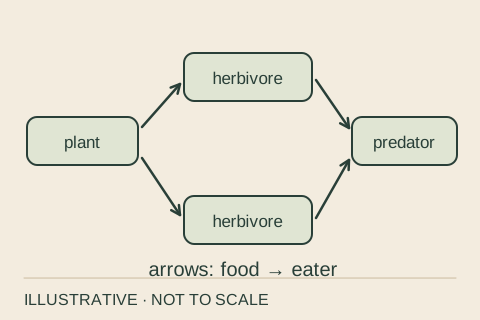
39 · Food web
A plant links to two herbivores, which link to a predator; arrows point from food toward the eater.
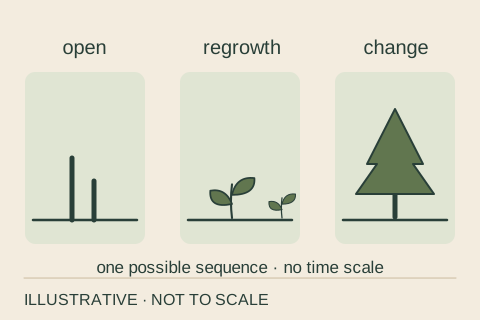
40 · Succession
Three conceptual panels show open ground, low regrowth and a developing woodland; no years or inevitable endpoint are assigned.