BCC / FIELD NOTEBOOK01 / 16 · Landforms
Follow a rock's outline
Let your eye draw before your pencil does.
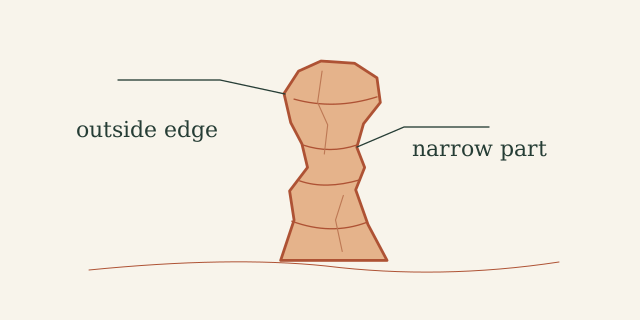 Illustrative rock profile. The wide and narrow parts are invented examples, not a scan or a named landmark.
- Choose one visible rock form, or use the drawing. Follow its outside edge with your eyes.
- Sketch only the outline. Mark one place it widens and one place it narrows.
- Compare two parts of the same outline. What can you describe without naming the rock?
What I notice
Draw or describe natural features only.
What I wonder
Would a different viewpoint change the outline?
A little context. Weathering breaks rock down; erosion moves the loosened material. Together they help shape Bryce's rock forms.
Keep the question open. An outline alone cannot tell you the rock's age, hardness or rate of change.
With care. Stay on the established trail or viewpoint, away from edges. A distant view is enough.
Look at the spaces between
Sometimes the empty space is the best clue.
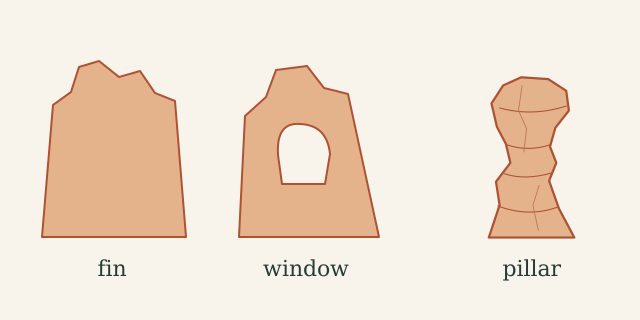 Illustrative comparison: fin, window and pillar. Separate examples, with no scale or elapsed time.
- Compare a wall-like form, an opening, and a separate pillar in the diagram.
- Sketch the empty space you see. Is it surrounded by rock, or open above?
- If you cannot see through a dark patch, leave it as an unanswered question.
What I notice
Draw or describe natural features only.
What I wonder
Is it a gap or a shaded surface?
A little context. Weathering and erosion can shape fins, openings and individual hoodoos. These drawings compare forms.
Keep the question open. A dark patch is not proof of a hole. The three examples are not a timetable for any real rock.
With care. View openings from the trail. Do not climb toward them or stand beneath loose rock.
Trace a visible band
One line can lead you across a landscape.
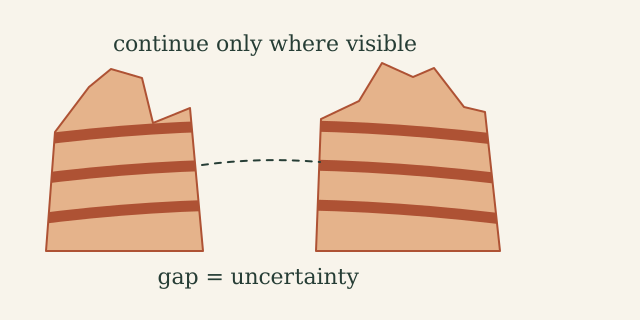 Illustrative bands crossing invented forms. Dashed lines mark uncertainty, not a surveyed rock contact.
- Find a visible line or color band across rock, or start with the drawing.
- Follow it only as far as you can actually see. Use a dashed line for a hidden part.
- Does the line continue, break, or disappear behind another form?
What I notice
Draw or describe natural features only.
What I wonder
What makes me think these lines connect?
A little context. Bryce's rocks began as accumulated sediments. Visible bands can invite questions about that history.
Keep the question open. A visible line could also be a shadow, stain or fracture. Do not label a geologic contact from this exercise.
With care. Trace on paper only. Leave rock surfaces unmarked and untouched.
Notice the loose pieces
Look for a pattern without moving a thing.
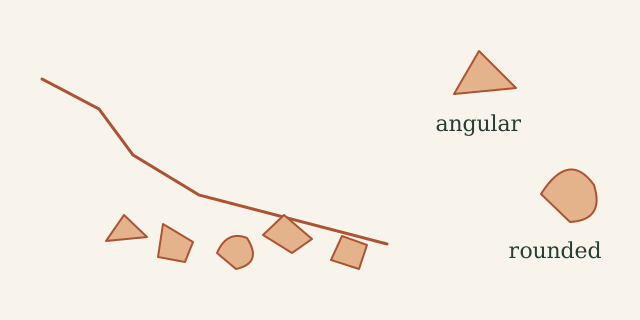 Illustrative loose fragments below a slope. Placement and shapes are invented; this is not a stability assessment.
- From a safe trail, look at loose fragments already visible beside rock; or use the drawing.
- Draw three different shapes rather than counting every piece.
- Separate what you see from your idea about how the fragments arrived.
What I notice
Draw or describe natural features only.
What I wonder
What other processes could move a fragment?
A little context. Broken rock can be moved by erosion. A pile of fragments records a result, not the moment it happened.
Keep the question open. Fragment shape does not establish when a rock fell or whether a slope is stable.
With care. Do not enter loose slopes, pick up fragments, or wait beneath cliffs.
Find the cast shadow
A shape on the ground tells a different story.
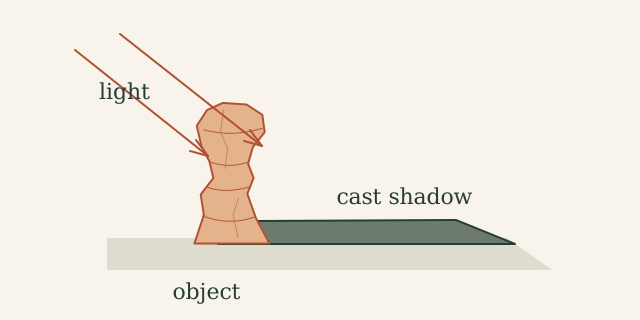 Illustrative object and cast shadow on a flat surface. The light direction is conceptual, not local Sun data.
- Look down at a shadow or study the drawing. Never look directly at the Sun.
- Find the object and the separate outline of its cast shadow.
- Compare their shapes. Is one stretched, broken or partly hidden?
What I notice
Draw or describe natural features only.
What I wonder
How does the ground change the shape?
A little context. A shadow shows where an object blocks light. Its appearance depends on the light and the receiving surface.
Keep the question open. This sketch cannot give object height, compass direction or time of day.
With care. Keep your eyes on the ground and landscape, never the Sun. Keep away from edges.
Compare two shadows
Keep the object the same; notice what changes.
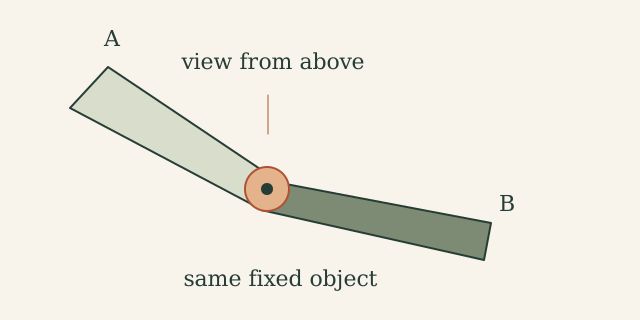 Two illustrative shadows of the same object under different light directions. A and B do not represent actual times.
- Compare the two examples, or observe a fixed object's shadow at two safe moments.
- Sketch both outlines on paper. Label them A and B, without recording a time or location.
- Describe a difference in direction or length. It is fine if no change is clear.
What I notice
Draw or describe natural features only.
What I wonder
Was the object fixed in both views?
A little context. As the Sun's apparent position changes, a fixed object's shadow can change in direction and length.
Keep the question open. The pair is an invented comparison, not a prediction for Bryce today. No return visit is required.
With care. Never look at the Sun. Use the indoor diagrams whenever conditions or footing make observation unsuitable.
Look twice at color
Describe the light before naming the material.
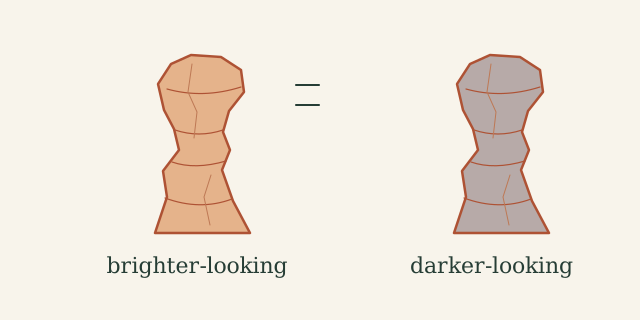 The same invented outline in two palettes. No measured color, time of day or real lighting reconstruction.
- Compare a lit surface and a shaded surface, or the two drawn examples.
- Use relative words: lighter, darker, warmer-looking, cooler-looking.
- Write one description of appearance and one question you still have.
What I notice
Draw or describe natural features only.
What I wonder
Could light explain part of the difference?
A little context. This drawing holds the outline constant and changes its colors to demonstrate a visual comparison.
Keep the question open. Illustrated colors are editorial choices, not sampled rock colors. Color alone is not a mineral identification.
With care. Do not move off the trail to match the diagram's angle. Never look directly at the Sun.
Read a tree silhouette
Start with shape, before a species name.
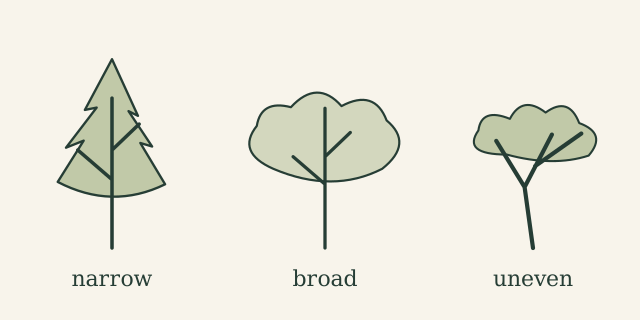 Three illustrative tree shapes, not species portraits. Size differences are compositional, not measured.
- Choose a visible tree or one of the drawings. Notice the whole outline first.
- Sketch its broad shape with five lines, then add one branching detail.
- Compare a tall crown, a broad crown and an uneven crown without assigning a name.
What I notice
Draw or describe natural features only.
What I wonder
Which detail distinguishes the outlines?
A little context. Bryce supports varied plant communities. Describing form is a useful beginning to looking carefully.
Keep the question open. Silhouette alone does not identify a species, age, health or cause of an unusual shape.
With care. Observe without touching branches, bark or roots. Keep wildlife undisturbed.
Look at leaf patterns
A close look does not need a collected sample.
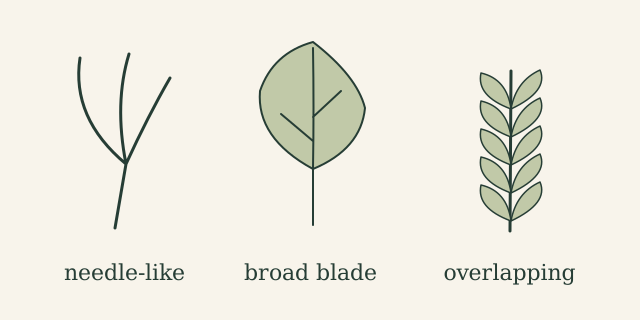 Illustrative enlarged foliage forms. Relative sizes are invented and are not diagnostic features.
- Look at foliage already visible from the trail, or compare the enlarged diagrams.
- Describe narrow needles, broad blades or tiny overlapping shapes only when visible.
- Sketch an arrangement: spaced, clustered or overlapping. Keep uncertain details blank.
What I notice
Draw or describe natural features only.
What I wonder
What is too small or distant to resolve?
A little context. These drawings offer a vocabulary for visible foliage shapes, not a botanical key.
Keep the question open. The examples are simplified. No species, edibility or safe-to-touch claim follows from a match.
With care. Do not pick, taste, rub or collect plants. Use the drawing if a detail is out of reach.
Notice plant neighbors
Describe what grows together, without explaining it too soon.
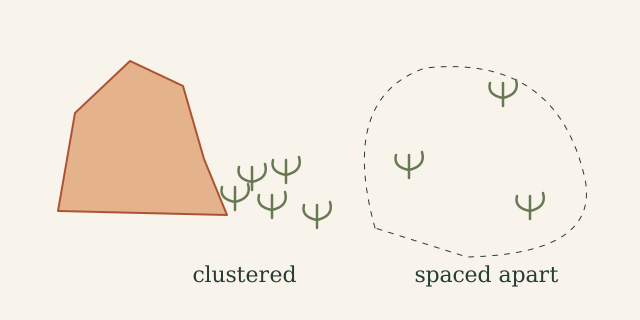 Illustrative plant spacing near a rock and in an open patch. Not an occurrence record or habitat map.
- Compare two patches you can see from one safe position, or use the drawing.
- Sketch where plants look clustered or spaced apart. Omit exact locations.
- List a visible difference, then a possible question about light, water or shelter.
What I notice
Draw or describe natural features only.
What I wonder
Which condition would need an actual measurement?
A little context. Different plant communities occur across Bryce's landscapes. A small view can raise questions about growing conditions.
Keep the question open. A single glance cannot establish why a plant grows there, soil moisture, abundance or habitat boundaries.
With care. Stay on the trail. Do not enter a patch, search for rare plants or record sensitive locations.
Describe a patch of sky
Use shape words. Leave the forecast to the forecast.
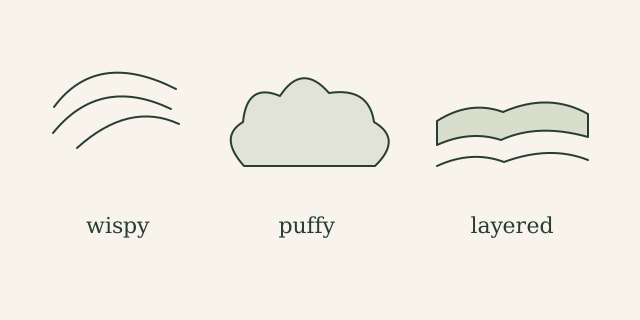 Illustrative wispy, puffy and layered cloud forms. No local sky observation, altitude or forecast is represented.
- From a safe place, look at a patch of sky away from the Sun, or use the drawing.
- Sketch wisps, lumps or layers. Leave clear space unfilled.
- Describe only the visible pattern; do not decide whether it is safe to remain outdoors from the sketch.
What I notice
Draw or describe natural features only.
What I wonder
Is there more than one shape in view?
A little context. Clouds have broad wispy, puffy and layered forms. Real skies can combine forms or look ambiguous.
Keep the question open. Shape alone does not give cloud height, a rain forecast or an all-clear for lightning.
With care. Check official forecasts. If thunder is heard, stop and seek a substantial building or enclosed hard-topped vehicle.
Watch for wind clues
Notice movement without turning it into a number.
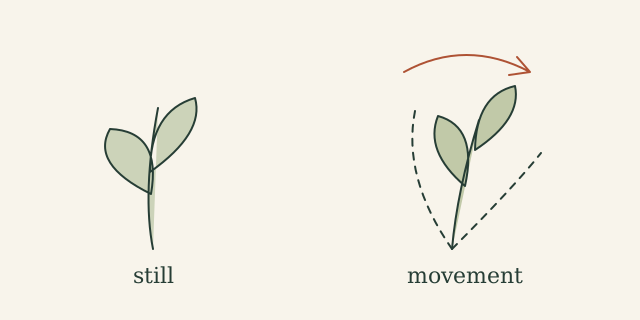 Illustrative still and moving foliage. Dashed outlines suggest movement; no wind speed or force is measured.
- Watch visible foliage briefly from a safe place, or compare the drawn examples.
- Describe stillness, small movement or larger movement. Your viewpoint is only a small sample.
- Sketch the part that moved with a dashed alternate outline.
What I notice
Draw or describe natural features only.
What I wonder
Was the movement continuous or occasional?
A little context. This activity compares visible movement. The drawings offer descriptive words, not a calibrated wind scale.
Keep the question open. Movement does not establish wind speed, gust strength, direction at another place or future conditions.
With care. Do not toss soil, leaves or objects to test the wind. Stop if conditions are uncomfortable or unsafe.
Read a water-shaped pattern
A branching line can begin a question.
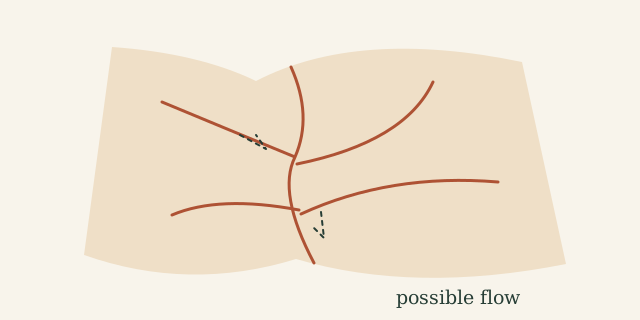 Illustrative branching grooves on an abstract slope. Arrows show a possible flow idea, not measured drainage.
- Look at a visible groove or branching pattern from the trail, or study the drawing.
- Sketch where small lines join a larger one. Use arrows only as a possible interpretation.
- Separate the pattern you see from the process you think may have made it.
What I notice
Draw or describe natural features only.
What I wonder
What other processes could make a line?
A little context. Runoff can carry loose material and contribute to erosion. Branching grooves invite questions about that movement.
Keep the question open. A groove does not prove water is present now, when rain last fell, or which way a future flood will move.
With care. Do not enter drainages to investigate. Check official conditions; distant rain can create hazards.
Imagine water in a crack
Use a model to ask a better question.
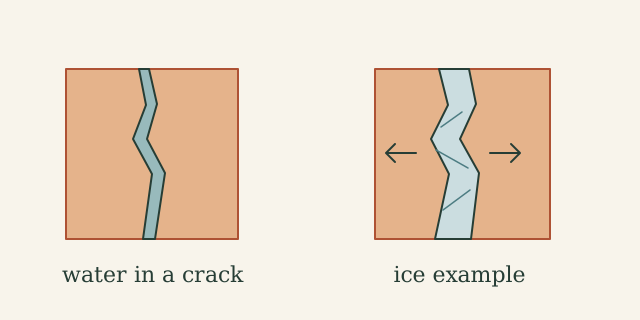 Illustrative frost-wedging concept. Expansion and crack width are exaggerated; no fixed percentage or time step is shown.
- Study the two panels: water in a crack and an expanded ice example.
- Draw a crack, then a second version showing a possible change.
- Label the second drawing as an idea. Outdoors, observe only a visible crack from a safe distance.
What I notice
Draw or describe natural features only.
What I wonder
What evidence would show freezing actually occurred?
A little context. Water can enter rock cracks. Freezing water expands and can contribute to rock breakdown under suitable conditions.
Keep the question open. A visible crack does not prove freezing caused it. This exaggerated model gives no temperature history, rate or prediction.
With care. Do not add water, force a crack, climb rock, or handle ice on a trail.
Make room for quiet
Pause the conversation. Let the place speak.
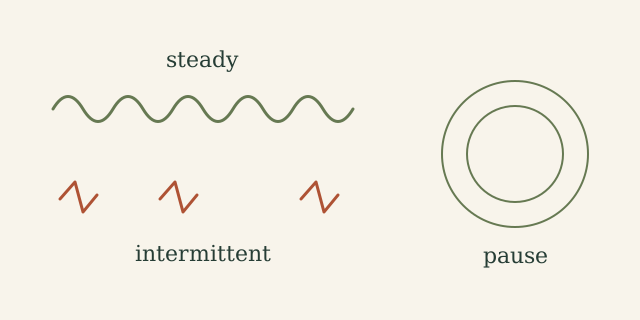 Illustrative steady and intermittent sound marks. No audio, recording, waveform measurement or wildlife identification.
- If hearing is useful to you, pause briefly in a safe place and listen without recording.
- Describe a sound as steady, intermittent or uncertain; do not name an unseen animal.
- Alternatively, study the drawn sound patterns or observe quiet movement. No hearing task is required.
What I notice
Draw or describe natural features only.
What I wonder
Which sounds stopped when we became quiet?
A little context. Sound is part of a park experience. Listening gently and keeping voices low can leave more room for others to hear.
Keep the question open. The diagram is symbolic. A sound alone does not verify a species, distance, population or decibel level.
With care. Keep eyes open and remain aware of the trail. Do not play calls, approach wildlife or use amplified sound.
Leave the story in place
Keep the observation. Leave the object.
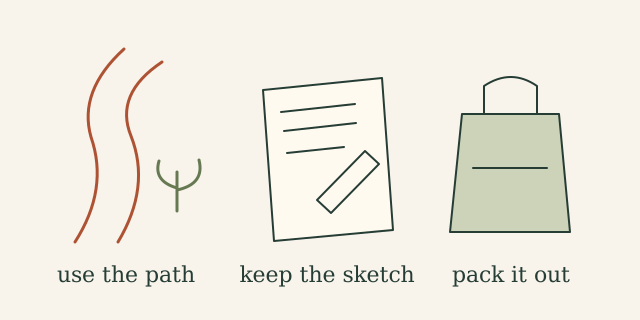 Illustrative care reminders: use the path, draw on paper, and carry out your litter. No route or official symbol is depicted.
- Review one observation from the notebook or practice with the diagram.
- Choose a way to record it that leaves plants, rocks and wildlife undisturbed.
- Finish with an unanswered question, not a collected object or a claim you cannot support.
What I notice
Draw or describe natural features only.
What I wonder
What question would I bring to a ranger or a reliable source?
A little context. Careful observation can happen from established trails while leaving natural objects where they are.
Keep the question open. This independent BCC notebook is not an NPS Junior Ranger activity, badge, credential or official program.
With care. Stay on designated trails, give wildlife space, pack out your own litter, and follow posted instructions.