← Interactive stories

Eight conversations to take along.

Print this page for eight landscape discussion cards. Each card is one A5 page; choose “fit to page” for other paper sizes. Use your browser’s Print command. No JavaScript needed.

Download the eight-card PDF · Read every branch and explanation

BCC / Stewardship stories01 of 08 · Trails
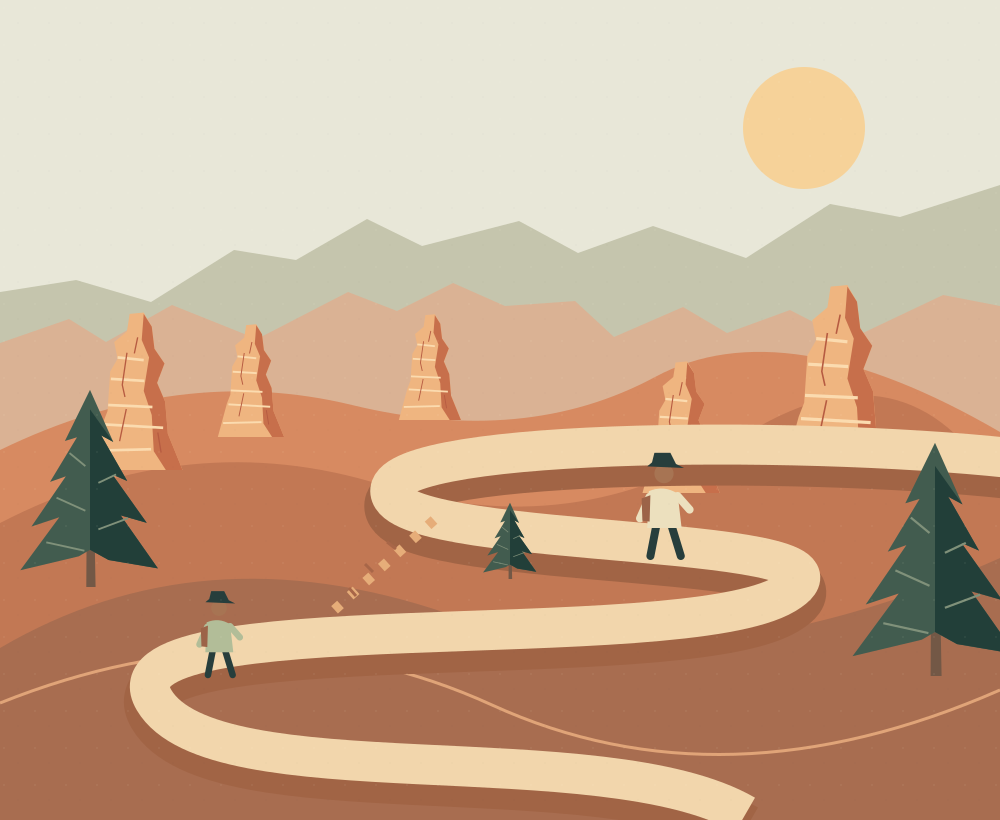
Original illustration: a pale trail bends through orange slopes. A faint diagonal crosses the planted ground between two turns. Two hikers remain on the winding trail.
Original illustration · an imagined situation

Talk it over

What makes a path look official? What would you check if its status were unclear?

The tempting shortcut

Imagine a quiet bend on a Bryce trail. The next switchback is visible below you. A worn diagonal seems to cut out the turn. Your friend says, “It is only a few steps.”

Which way do you go?

  1. Take the diagonal; it is already worn.
  2. Stay with the switchback.
  3. Stop and check the park map.
BCC / Stewardship stories02 of 08 · Wildlife
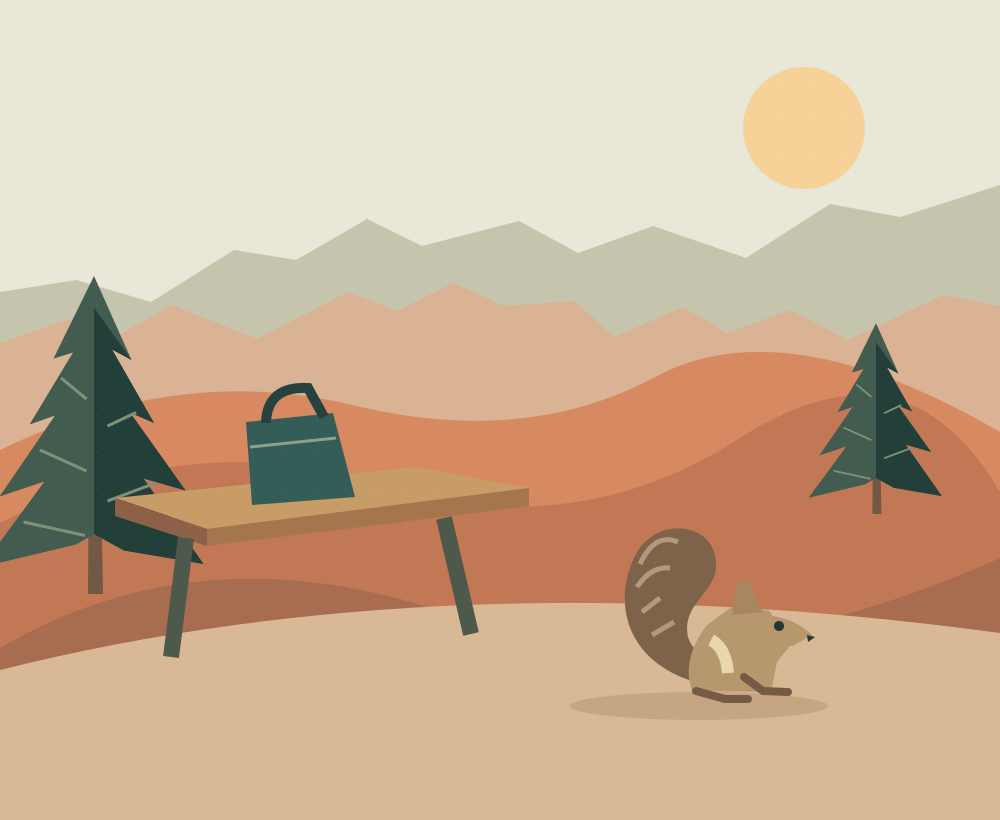
Original illustration: a small squirrel stands beside a picnic area. A closed lunch bag rests on a bench. The animal and the bag are separated by open space; no distance is measured.
Original illustration · an imagined situation

Talk it over

How could the same photograph be made without changing the animal’s behavior?

A visitor at lunch

Imagine finishing lunch at a picnic area. A squirrel comes toward your table. You have a few crumbs and a phone within reach.

What do you do with the last crumbs?

  1. Offer a tiny crumb for a photo.
  2. Secure the crumbs with the rest of lunch.
  3. Brush the crumbs onto the ground.
BCC / Stewardship stories03 of 08 · Dark skies
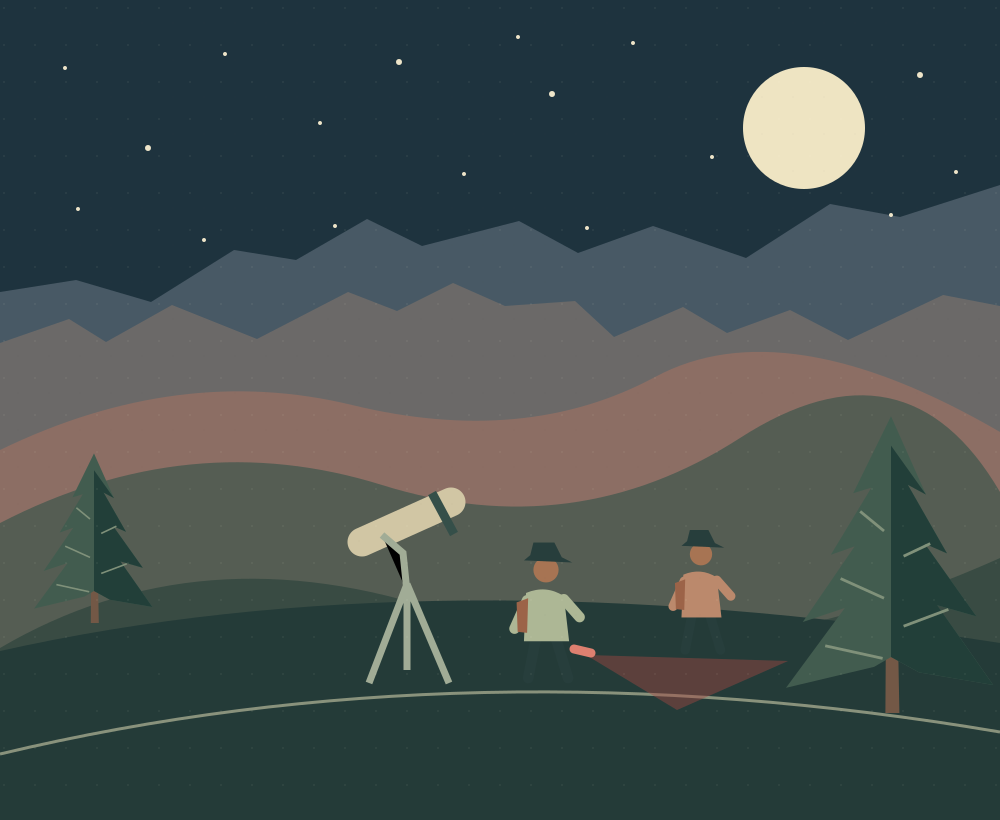
Original illustration: two stargazers stand on a broad level viewing area beneath an invented star pattern. A small red light points toward the ground. The star positions are illustrative.
Original illustration · an imagined situation

Talk it over

How would your choice change if you needed help, or if a ranger program gave different instructions?

One light, many eyes

Imagine an independent evening of stargazing at an open viewing area. People nearby are looking up. You need a light to find the zipper on your bag.

How do you use your light?

  1. Use a low red light, aimed at the bag.
  2. Sweep a bright white beam across the area.
  3. Keep it off even though you cannot see your footing.
BCC / Stewardship stories04 of 08 · Litter
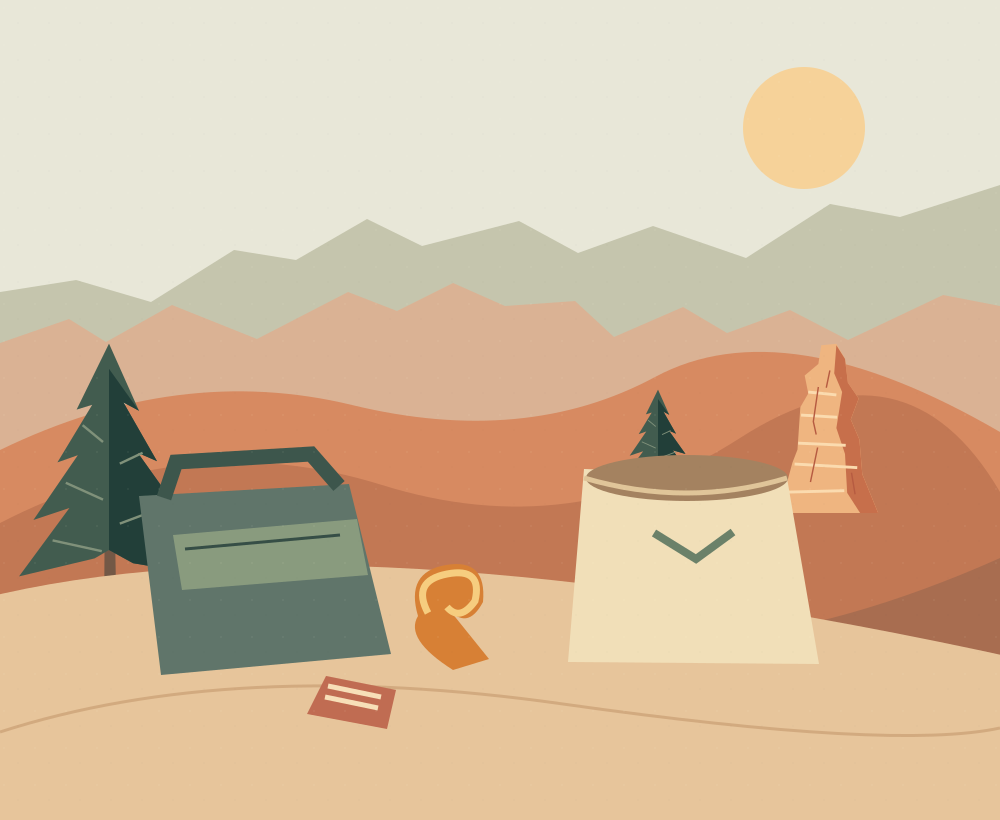
Original illustration: an orange peel and a wrapper sit beside a reusable lunch bag on a broad trail-side stopping area. A small open pouch is ready to hold the scraps.
Original illustration · an imagined situation

Talk it over

What could you pack before a walk to make the considerate choice the easy choice?

The last orange peel

Imagine a snack stop. Your orange is finished, the nearest trash container is elsewhere, and an empty pocket in your bag could hold the peel.

Where does the peel go?

  1. Tuck it under a bush; it will break down.
  2. Put it in the pouch for later disposal.
  3. Set it beside the trail to collect on the return.
BCC / Stewardship stories05 of 08 · Fragile surfaces
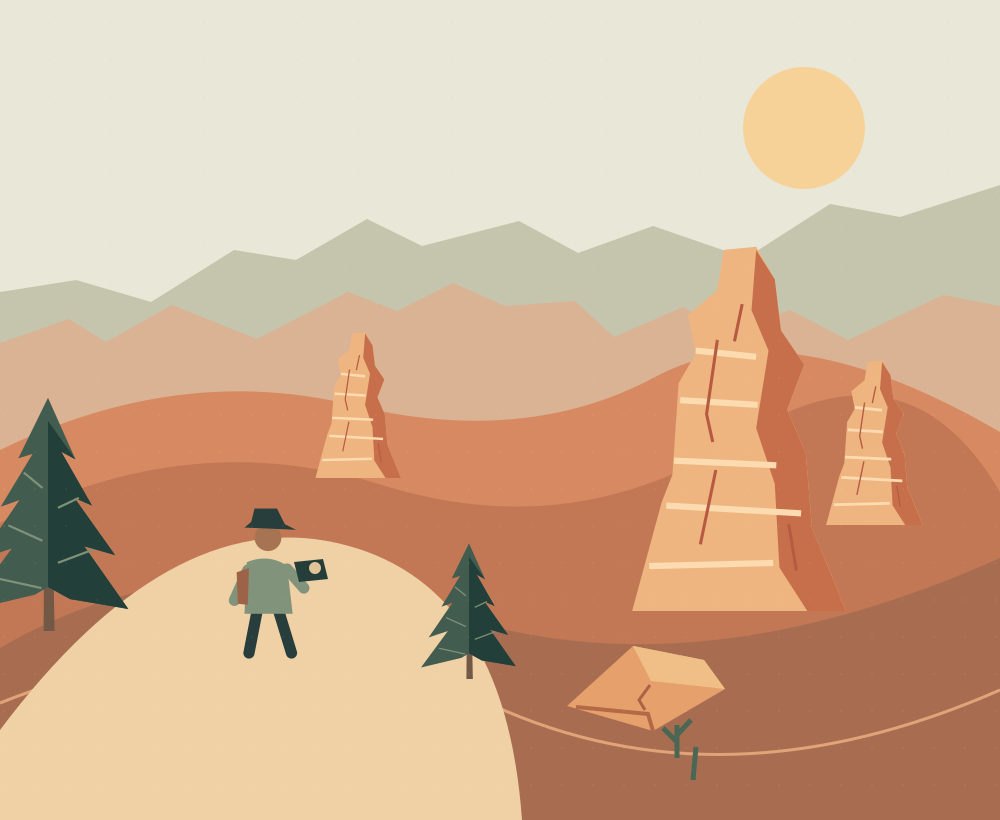
Original illustration: a photographer stays on a wide path, with orange hoodoo-like forms beyond it. The crumbly slope and plants are separated from the path. No actual landmark is depicted.
Original illustration · an imagined situation

Talk it over

Which parts of a photograph can change without moving the photographer onto fragile ground?

Room for a photograph

Imagine lining up a photograph from the trail. A low rock ledge just beyond the path would give you a cleaner view. Its surface looks solid from here.

How do you find the picture?

  1. Step onto the ledge for a higher angle.
  2. Find a new composition from the path.
  3. Ask a friend to stand on the ledge for scale.
BCC / Stewardship stories06 of 08 · Other visitors
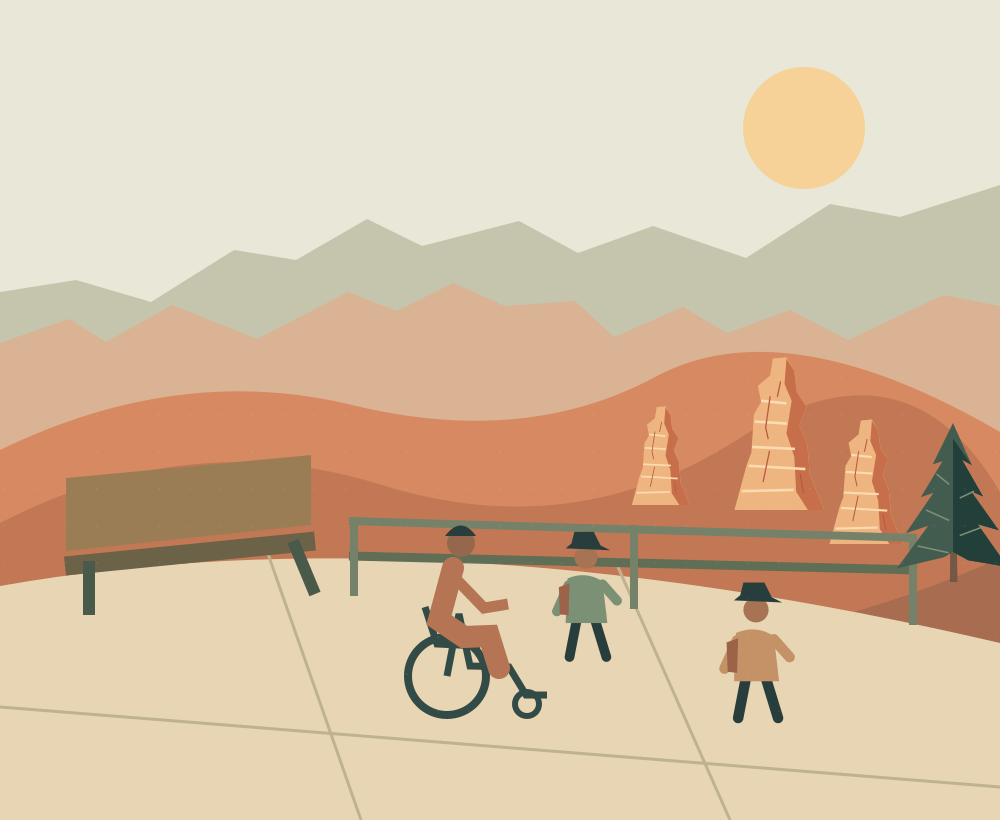
Original illustration: visitors, including a wheelchair user, share a broad paved viewing area. A bench and a clear passing space face distant orange landforms. This is an invented accessible setting.
Original illustration · an imagined situation

Talk it over

How can a group enjoy being together while leaving space for someone else’s experience?

A shared soundscape

Imagine your group arriving at a broad overlook. Someone is listening quietly, another visitor is moving through, and a friend suggests playing a song on a speaker.

How do you set the mood?

  1. Play the song softly for the group.
  2. Keep the speaker off and listen.
  3. Call out to make the canyon answer.
BCC / Stewardship stories07 of 08 · Leave what you find
Original illustration: a small patterned stone lies undisturbed beside a trail. An open field notebook shows a simple sketch of it; the sketch is not a geological identification.
Original illustration · an imagined situation

Talk it over

What would you record to make a useful memory without claiming an identification you have not checked?

A pocket-sized memory

Imagine noticing a small stone beside the trail. Its bands catch your eye. You would like to remember it after you leave.

What do you take away?

  1. Put the stone in your pocket.
  2. Photograph it where it lies.
  3. Stack it with other stones as a marker.
BCC / Stewardship stories08 of 08 · Changing plans
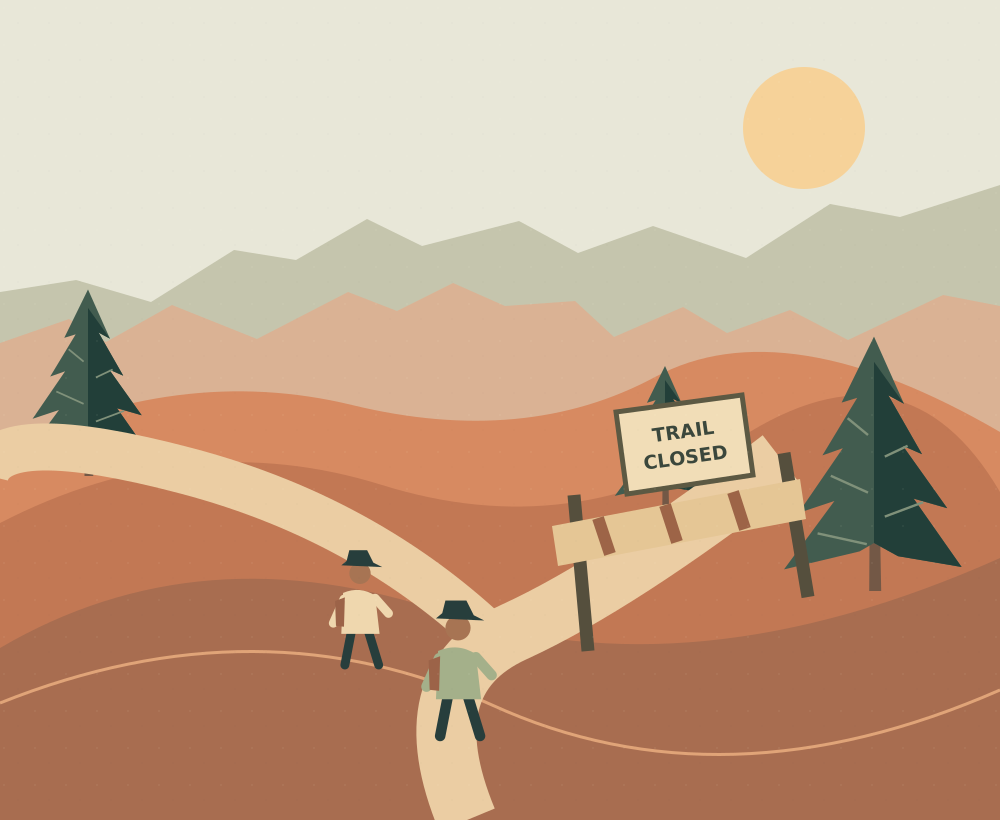
Original illustration: an invented trail junction has a simple Trail closed sign across one branch. An open established path leads back the other way. It is not a map or a current closure notice.
Original illustration · an imagined situation

Talk it over

What should a useful backup plan preserve, and what can it let go of?

The route can wait

Imagine reaching a junction where a posted sign closes the route you planned. Your saved screenshot shows the route as open. This is a fictional situation, not a report of a current closure.

Which information guides your next step?

  1. Follow the saved screenshot past the sign.
  2. Respect the sign and rethink the route.
  3. Look for footprints around the barrier.