
Natural change and avoidable disturbance
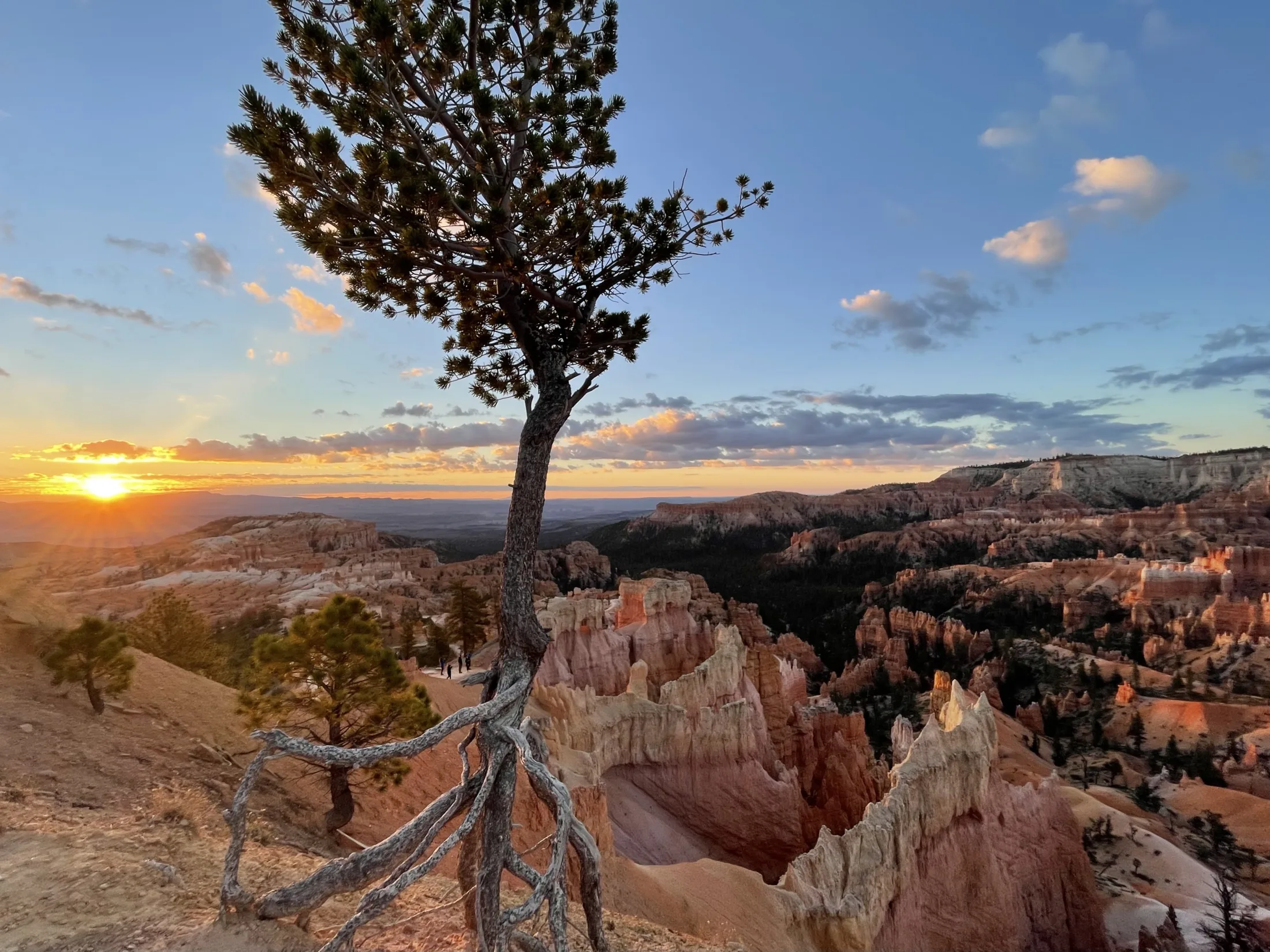
Bryce is a changing landscape. Weathering and erosion continue whether anyone visits or not, and the processes that create hoodoos also wear them away. That does not make visitor behavior irrelevant. NPS explains that walking toward a hoodoo’s base can disturb the clay-rich slopes that help protect its foundations. Staying on established trails is a practical way to avoid adding that disturbance.
The distinction matters: care is not a promise to freeze a landscape in time. It is a decision about our own contribution to change. Learning how rock breaks down gives a concrete reason to respect the ground between the trail and the formation you came to see.
Let curiosity change the question
Instead of “How can I get closer?” try “What can I distinguish from here?” A photograph taken from a permitted viewpoint can help you compare outlines later. A small sketch can make you notice where a wall ends or where one layer projects beyond another.
If a detail is too distant to resolve, record the uncertainty. You can look for an explanation in a guide, an interpretive sign or a conversation with a ranger. There is no need to settle every question during the visit, and a gap in your notes is a good starting point for further learning.
Look
Choose a detail visible from established public access.
Record
Write what you see, then a separate question about it.
Leave
Keep the note and leave the rock, soil and plants in place.
Keep a record that means something later
Date your notes and identify the public viewpoint. Describe light and visibility if they affected what you could see. “The cliff looked brighter in afternoon light” is different from “the rock changed color.” A careful record preserves that difference instead of turning an impression into a claim.
For repeated photographs, compare the framing before drawing a conclusion. A shifted camera position can hide one column behind another. A casual pair of images is not a measured erosion rate or a forecast of collapse. The goal here is attentive learning, not a scientific finding.
Care includes other visitors and current conditions
NPS asks visitors to stay on trails, avoid climbing hoodoos, leave natural objects where they are and avoid feeding or disturbing wildlife. Choose observation pauses that do not obstruct other trail users, and keep any equipment within permitted access. The park’s hiking guidance is the place to read its fuller advice.
This geology guide does not assess today’s trail conditions or the stability of a particular slope. Check current NPS notices, local signs and visitor-center information. A saved article can explain the landscape; current information belongs in the visit plan as well.
Sources & reading
- NPS · Protect the Hoodoos — erosion and effects of leaving established trails; updated October 16, 2018.
- NPS · Hiking — visitor conduct and planning; updated October 11, 2024.
- NPS · Current Conditions — official access information; displayed update August 31, 2026. Recheck before travel.
Written and sources checked September 30, 2026. The observation exercise is BCC’s editorial teaching suggestion. It is not a field survey or independently reviewed scientific protocol.